

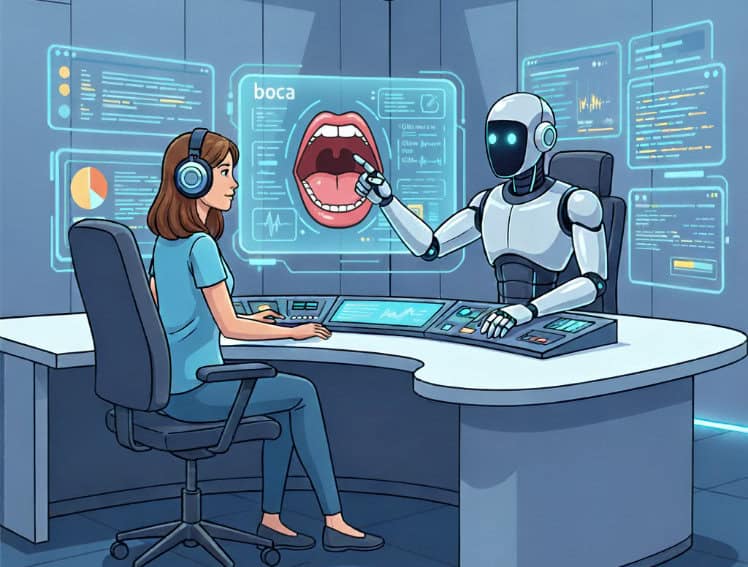
Artificial intelligence is transforming the way people learn new languages, including Spanish. Traditional approaches like textbooks and classroom instruction often require months or even years to achieve conversational fluency. Data from recent language learning studies shows that students using AI-assisted platforms can improve retention and speaking skills up to 50% faster than those relying on conventional methods. how to learn spanish fast personalized instruction, adapts to learner performance, and delivers instant feedback, making the process more efficient and engaging.
How Does AI Accelerate Spanish Learning?
AI-driven language learning platforms use machine learning algorithms to analyze individual performance and adjust lesson difficulty in real time. Research indicates that adaptive learning can increase knowledge retention by around 40%, helping learners focus on areas that need the most attention. For example, AI systems detect repeated pronunciation errors, grammar mistakes, or vocabulary gaps, and automatically create exercises targeting these weaknesses. This personalized approach accelerates progress and reduces the time needed to achieve conversational fluency.
What Features Make AI Language Tools Effective?
Modern AI learning platforms combine multiple features to optimize learning outcomes. Speech recognition allows learners to practice pronunciation with instant corrections, while interactive conversation simulations replicate real-life dialogues. Data shows that learners who actively practice speaking with AI tools improve oral proficiency up to 30% faster than those using static study methods. Contextual exercises and gamified challenges further reinforce grammar, vocabulary, and comprehension skills, keeping learners engaged while supporting measurable progress.
Why Is Personalization Key to Faster Learning?
Each language learner has unique strengths and weaknesses. AI technology creates customized learning paths, adjusting content to individual performance patterns. Studies reveal that personalized learning can reduce overall study time by 25% while increasing accuracy in grammar and vocabulary usage. By focusing on what learners truly need, AI ensures that study time is maximized, making Spanish acquisition faster and more effective.
How Does Consistent Practice Boost AI Learning Results?
Consistency is critical for language retention. Research indicates that learners who practice daily for just 15–20 minutes can achieve conversational fluency approximately 30% faster than those with irregular study routines. AI platforms facilitate this consistency by providing daily exercises, reminders, and progress tracking. Continuous engagement helps reinforce memory and language structures, enabling learners to develop confidence in speaking and writing Spanish.
What Role Does Feedback Play in Accelerating Fluency?
Instant feedback is one of the most significant advantages of AI-assisted learning. Correcting mistakes in real time helps prevent errors from becoming habitual. Studies show that learners who receive immediate feedback reduce error rates by up to 35%, improving both accuracy and confidence. AI platforms monitor performance continuously, guiding learners through challenging concepts and ensuring that progress is measurable and reliable.
How Does Gamification Improve Engagement and Retention?
Gamification elements such as points, streaks, and interactive challenges keep learners motivated and accountable. Educational research demonstrates that gamified learning increases user engagement by over 40%. By combining adaptive difficulty with gamified activities, AI platforms ensure that learners remain challenged, motivated, and consistent in their Spanish practice.
Can AI Replace Traditional Language Classes?
AI is most effective when combined with complementary methods like conversation practice, reading, or cultural immersion. Studies show that learners using hybrid approaches—AI-assisted study alongside human interaction—achieve fluency faster and retain knowledge longer. AI acts as a flexible, personalized tutor, allowing learners to progress at their own pace while strengthening real-world communication skills.
Why Should Learners Use AI to Learn Spanish Fast?
AI language learning tools provide measurable improvements in vocabulary retention, pronunciation, grammar, and conversational ability. Statistical evidence confirms that AI-assisted learners achieve fluency significantly faster than traditional methods. By leveraging personalized lessons, instant feedback, and interactive practice, learners can confidently accelerate their Spanish learning journey while maintaining engagement and efficiency.
 Dominick Sherman